


What is a Frayed Wire? Causes, Hazards, and What to Do
A frayed wire exposes the conductor beneath worn insulation, creating shock and fire risks. Learn common causes, how to spot it in vehicle and industrial wiring, and when to repair versus replace.
How Can I Prevent Fungi Forming On Electrical Wires?
There’s a fungus amungus. You’ve likely heard that quippy line before. But, did you know that there are plenty of fungi species that can grow in the air? In humid environments where electrical wires are present, this can cause trouble. So, how can you prevent fungi from forming on your electrical wires? Gateway Cable Company... Read more »
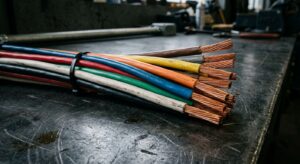
Electric Wire Color Codes (NEC Standards for 120V, 240V, and 480V Systems)
Electric wire color codes by NEC standard for 120V, 240V, 208V, and 480V AC systems plus DC supply configurations. Quick-reference tables for line, neutral, and ground identification.
How Do You Calculate Water Resistance?
Here at the Gateway Cable Company we’re proud to sell a wide variety of products for use in the military, agriculture, and the automotive industry. We may not have a water resistance calculator, but we understand that some may be asking, “how do you calculate water resistance?” We’ve written the guide below to show you... Read more »

How to Wire a Relay
In this wire a relay guide, we’ll offer a broad overview of how to wire a relay after talking a little more about what a relay is and the applications where one can be useful. If you’re replacing a relay in a vehicle, machine, or appliance, we can help you get the products required to... Read more »
What is a Hook-Up Wire?
What is a hook-up wire? It’s a special type of wire that’s used primarily in low-current, low-voltage applications. If you need wiring for an enclosed piece of electronic equipment, there’s a good chance you need a hook-up wire. Hook-up wires vary in terms of conductors, jacket and insulation material, and voltage, so it’s important to... Read more »
-
What is a Frayed Wire? Causes, Hazards, and What to Do
A frayed wire exposes the conductor beneath worn insulation, creating shock and fire risks. Learn common causes, how to spot it in vehicle and industrial wiring, and when to repair versus replace.
-
How to Wire a Relay
In this wire a relay guide, we’ll offer a broad overview of how to wire a relay after talking a little more about what a relay is and the applications where one can be useful. If you’re replacing a relay in a vehicle, machine, or appliance, we can help you get the products required to... Read more »
How Do You Calculate Water Resistance?
Here at the Gateway Cable Company we’re proud to sell a wide variety of products for use in the military, agriculture, and the automotive industry. We may not have a water resistance calculator, but we understand that some may be asking, “how do you calculate water resistance?” We’ve written the guide below to show you... Read more »
-
Electric Wire Color Codes (NEC Standards for 120V, 240V, and 480V Systems)
Electric wire color codes by NEC standard for 120V, 240V, 208V, and 480V AC systems plus DC supply configurations. Quick-reference tables for line, neutral, and ground identification.
How Can I Prevent Fungi Forming On Electrical Wires?
There’s a fungus amungus. You’ve likely heard that quippy line before. But, did you know that there are plenty of fungi species that can grow in the air? In humid environments where electrical wires are present, this can cause trouble. So, how can you prevent fungi from forming on your electrical wires? Gateway Cable Company... Read more »
What is a Hook-Up Wire?
What is a hook-up wire? It’s a special type of wire that’s used primarily in low-current, low-voltage applications. If you need wiring for an enclosed piece of electronic equipment, there’s a good chance you need a hook-up wire. Hook-up wires vary in terms of conductors, jacket and insulation material, and voltage, so it’s important to... Read more »
-
What is a Frayed Wire? Causes, Hazards, and What to Do
A frayed wire exposes the conductor beneath worn insulation, creating shock and fire risks. Learn common causes, how to spot it in vehicle and industrial wiring, and when to repair versus replace.
-
Electric Wire Color Codes (NEC Standards for 120V, 240V, and 480V Systems)
Electric wire color codes by NEC standard for 120V, 240V, 208V, and 480V AC systems plus DC supply configurations. Quick-reference tables for line, neutral, and ground identification.
-
How to Wire a Relay
In this wire a relay guide, we’ll offer a broad overview of how to wire a relay after talking a little more about what a relay is and the applications where one can be useful. If you’re replacing a relay in a vehicle, machine, or appliance, we can help you get the products required to... Read more »
How Can I Prevent Fungi Forming On Electrical Wires?
There’s a fungus amungus. You’ve likely heard that quippy line before. But, did you know that there are plenty of fungi species that can grow in the air? In humid environments where electrical wires are present, this can cause trouble. So, how can you prevent fungi from forming on your electrical wires? Gateway Cable Company... Read more »
How Do You Calculate Water Resistance?
Here at the Gateway Cable Company we’re proud to sell a wide variety of products for use in the military, agriculture, and the automotive industry. We may not have a water resistance calculator, but we understand that some may be asking, “how do you calculate water resistance?” We’ve written the guide below to show you... Read more »
What is a Hook-Up Wire?
What is a hook-up wire? It’s a special type of wire that’s used primarily in low-current, low-voltage applications. If you need wiring for an enclosed piece of electronic equipment, there’s a good chance you need a hook-up wire. Hook-up wires vary in terms of conductors, jacket and insulation material, and voltage, so it’s important to... Read more »