

What is a Frayed Wire? Causes, Hazards, and What to Do
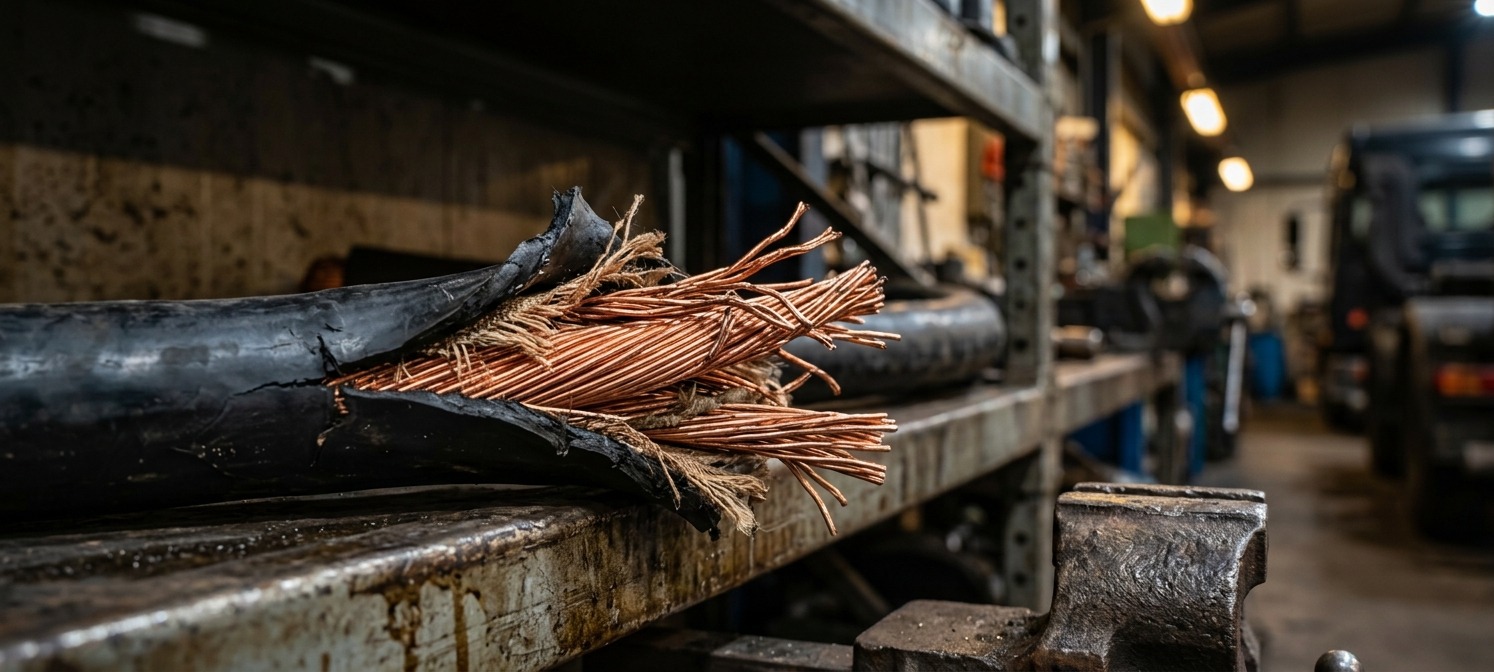
A frayed wire is a wire or cable whose outer insulation has worn, split, or come apart, exposing the metallic conductor underneath. This exposure can happen gradually from friction, bending, vibration, or rodent damage, and it creates both a performance issue and a safety hazard.
Frayed wiring is a common concern across power cords, extension cables, appliance cords, fixed electrical wiring, and vehicle or equipment wiring harnesses. Recognizing frayed wires early, and understanding when they need replacement rather than a temporary fix, is important for both safety and system reliability.
Jump to section:
- Frayed Wire vs. Frayed Cable vs. Frayed Cord: What’s the Difference?
- What Causes Wires, Cables, or Cords to Fray?
- Frayed Wiring in Vehicle and Industrial Applications
- Is a Frayed Electrical Cord Dangerous?
- What to Do When You Find a Frayed Wire or Cable
- How to Fix a Frayed Wire: Temporary and Permanent Solutions
- Preventing Frayed Wires and Cables
- Replacing Frayed Wires and Cables
- Project Support and Quote Requests
- FAQs About Frayed Wires, Cables, and Cords
Frayed Wire vs. Frayed Cable vs. Frayed Cord: What’s the Difference?
These terms are often used interchangeably, and in most everyday contexts, they refer to the same underlying problem: damaged insulation exposing the conductor inside.
- Frayed wire typically refers to a single conductor, often inside a wall, panel, or fixed installation.
- Frayed cable usually refers to a bundled assembly of multiple wires within a single jacket, such as a power cable or cable assembly.
- Frayed cord most often describes a flexible cord used with appliances, tools, chargers, or extension cords.
Regardless of terminology, the underlying concern is the same: exposed conductive material presents a risk of shock, short circuit, or fire, and should be addressed promptly.
What Causes Wires, Cables, or Cords to Fray?
Fraying typically results from one or more of the following:
- Rodent damage: Rodents chewing through insulation can expose wires, leading to fraying and further damage to the electrical system.
- Surface friction: Wires or cables rubbing against sharp edges, metal surfaces, or through repeated movement can wear down insulation over time.
- Excessive bending or flexing: Repeated bending, particularly near connectors, plugs, or fixed ends, can weaken and eventually break down the insulation layer.
- Vibration: In vehicle, tactical, and industrial equipment applications, sustained vibration can cause wires and cable assemblies to rub against surrounding structure or each other, gradually wearing through insulation at contact points.
- Age and material degradation: Over time, insulation materials can become brittle, crack, or degrade, especially with UV or heat exposure.
Frayed Wiring in Vehicle and Industrial Applications
Frayed wires and cables are a particular concern in military vehicle, tactical fleet, and industrial equipment applications, where wiring harnesses are routinely exposed to vibration, movement, temperature extremes, and repeated connect/disconnect cycles. Unlike a household extension cord, wiring in these environments is often bundled into harnesses and routed through areas with limited visibility, making fraying harder to detect during routine inspection.
Common contributing factors in vehicle and industrial settings include:
- Vibration-induced wear at points where a harness contacts a chassis, bracket, or adjacent cable
- Repeated flexing at connector interfaces during equipment operation or vehicle movement
- Exposure to heat, fuel, oil, or other fluids that can degrade insulation over time
- Abrasion from routing through tight spaces without adequate protection or strain relief
Because these applications often involve mission-critical or safety-critical systems, fleet maintenance teams and equipment operators should incorporate frayed wire and cable inspection into regular maintenance schedules, particularly at harness connection points and areas prone to movement or contact.
Is a Frayed Electrical Cord Dangerous?
Yes. A frayed wire, cable, or cord with exposed conductive material poses real hazards, including:
- Electrical shock risk: Exposed metal conductors create a direct shock hazard to anyone who makes contact.
- Short circuits: Exposed wires increase the risk of short circuits, which can damage connected equipment or trip protective devices.
- Fire hazard: Arcing or overheating at the point of exposure can ignite nearby materials, particularly in dry or enclosed spaces.
Because of these risks, a frayed wire, cable, or cord should never be left in continued use without being addressed.
What to Do When You Find a Frayed Wire or Cable
If you discover a frayed wire, cable, or cord with exposed metal, take the following steps:
- Stop using it immediately. Disconnect or de-energize the wire or cord before handling it.
- Assess the severity. Minor wear on the outer jacket, with insulation intact, is different from exposed bare conductor. Look closely for any visible metal strands, discoloration from heat, or a soft, brittle feel to the remaining insulation — any of these indicate the damage has gone beyond cosmetic wear.
- Determine whether it can be temporarily managed or needs replacement. Severely frayed wires with exposed conductor should be replaced rather than repaired.
How to Fix a Frayed Wire: Temporary and Permanent Solutions
Temporary fixes (appropriate only for minor fraying, and only as a short-term measure until replacement):
- Electrical tape: Wrapping several layers of electrical tape around the frayed section can provide a short-term barrier against contact and moisture.
- Heat shrink tubing: Heat shrink forms a tighter, more durable seal around a damaged section when heated, offering better protection than tape alone.
- Cable protectors: For frayed cords such as chargers or small appliance cords, a cable protector sleeve can reduce further wear and extend usable life.
Permanent solution:
- Replacement: For any wire, cable, or cord with significant fraying or exposed conductor, replacement is the safest and most reliable option. Temporary fixes do not restore the original insulation rating or long-term durability of the conductor.
Preventing Frayed Wires and Cables
- Avoid sharp bends or repeated flexing at the same point on a cable
- Route cables away from sharp edges, moving parts, and areas exposed to rodents
- In vehicle and industrial applications, secure harnesses away from vibration points and use grommets or strain relief where cables pass through structure
- Inspect cords, cables, and harnesses periodically, particularly in high-use, tactical, or industrial environments
- Use cable assemblies and connectors rated for the environmental and mechanical demands of the application, including NATO intervehicle connectors for military vehicle applications
Replacing Frayed Wires and Cables
When a frayed wire, cable, or cord needs to be replaced, selecting a cable assembly suited to the application’s current, voltage, and environmental requirements helps prevent recurring damage. For vehicle and tactical fleet applications, this includes selecting connectors and cable assemblies built to withstand vibration, environmental exposure, and repeated use. Gateway Cable Company offers cable assemblies, connectors, and NATO intervehicle connectors designed for demanding industrial, tactical, and power distribution environments, or browse our full product catalog for additional options.
Project Support and Quote Requests
For help selecting a replacement cable, connector, or assembly suited to your application, contact our team to discuss your specifications. You can also request a quote for custom cable assemblies and connector solutions.
FAQs About Frayed Wires, Cables, and Cords
What does it mean when a wire is frayed?
A frayed wire has damaged or worn insulation that exposes the metallic conductor underneath, typically caused by friction, bending, vibration, age, or rodent damage.
What does a frayed cable mean?
A frayed cable refers to a bundled cable assembly whose outer jacket or insulation has worn through, exposing one or more internal conductors.
How do you fix a frayed wire?
Minor fraying can be temporarily managed with electrical tape or heat shrink tubing, but wires with exposed conductor should be replaced rather than repaired long-term.
Are frayed electrical cords dangerous?
Yes. Frayed electrical cords with exposed conductors present a risk of electrical shock, short circuit, and fire, and should be addressed immediately.
What causes wires to fray?
Common causes include rodent damage, friction against sharp surfaces, repeated bending or flexing, vibration in vehicle or industrial equipment, and insulation degradation from age or environmental exposure.