

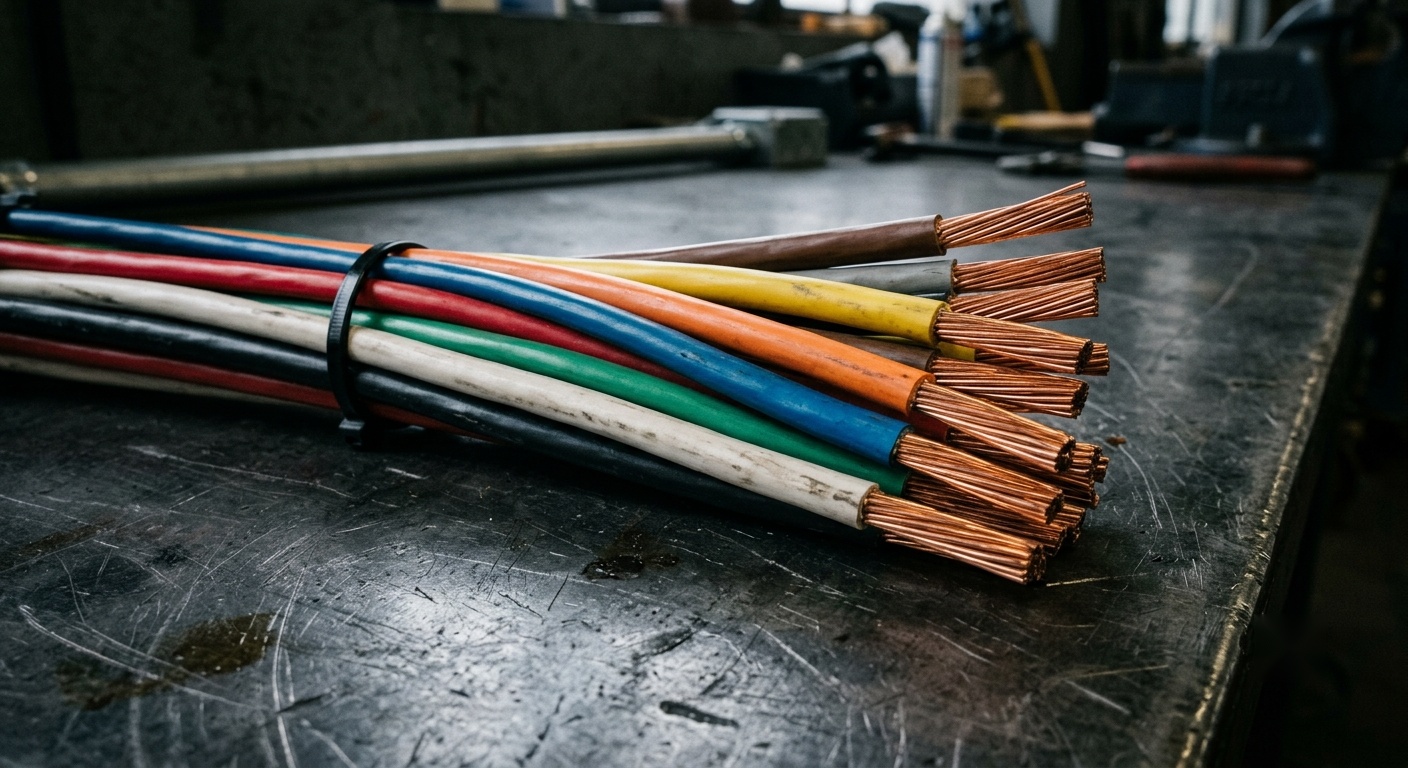
Electric Wire Color Codes (NEC Standards for 120V, 240V, and 480V Systems)
Summary
Electric wire color codes identify the function of each conductor, including line, neutral, and protective ground. This guide provides a quick-reference table of NEC wire color codes for 120V, 240V, 208V, and 480V systems.
It breaks down single-phase and three-phase wire colors for residential, commercial, and industrial power distribution. It also covers DC wire color codes for grounded and ungrounded supplies. Additional sections explain what each wire color means and clarify the difference between L and N wires for safe installation and troubleshooting.
Electric wire color codes are standardized color assignments used to identify the function of electrical conductors, including line (L), neutral (N), and protective ground (PG). In the United States, these codes follow National Electrical Code (NEC) conventions and vary by voltage and system type.
For quick reference:
- 120V systems use black (hot), white (neutral), and green or bare (ground)
- 480V systems use brown, orange, and yellow for three-phase conductors, with gray neutral and green ground
This guide outlines electric wire color codes across common AC and DC systems used in residential, commercial, and industrial applications.
Jump to section:
- Electric Wire Color Code Quick Reference
- NEC Electrical Wire Color Codes for AC Systems
- NEC Electrical Wire Color Codes for DC Systems
- What Each Wire Color Means
- Understanding L and N Wire Colors
- Electrical Cable Solutions for Power Applications
- Request Technical Support or Quote
- FAQs About Electric Wire Color Codes
Electric Wire Color Code Quick Reference
| System | L1 | L2 | L3 | Neutral | Ground |
|---|---|---|---|---|---|
| 120V | Black | — | — | White | Green/Bare |
| 240V | Black | Red | — | White | Green/Bare |
| 208V | Blue | Orange | Black | White | Green/Bare |
| 480V | Brown | Orange | Yellow | Gray | Green/Bare |
NEC Electrical Wire Color Codes for AC Systems
AC wire color codes depend on system voltage and phase configuration. These standards support safe installation, maintenance, and troubleshooting.
1 Phase Wire Color Code (Single-Phase Systems)
Single-phase systems use one alternating current waveform and are common in residential and light commercial applications.
120V Wire Colors (Single-Phase Residential Systems)
120V wire colors follow NEC standards: black is hot, white is neutral, and green or bare is ground. These are used in residential circuits such as outlets and lighting.
- Black wire: Line (L), hot conductor
- White wire: Neutral (N)
- Green, green/yellow, or bare: Protective Ground (PG)
240V Wire Colors (Single-Phase Systems)
240V systems use two hot conductors and are common for higher-load equipment such as HVAC systems and large appliances.
- Black wire: Line 1 (L1)
- Red wire: Line 2 (L2)
- White wire: Neutral (N)
- Green, green/yellow, or bare: Protective Ground (PG)
Three-Phase Wire Color Codes
Three-phase systems provide continuous power and are used in commercial and industrial environments.
208V Systems
208V wire color codes typically include blue, orange, and black for phase conductors, with white neutral and green ground. These systems are common in commercial buildings.
- Blue wire: Line 1 (L1)
- Orange wire: Line 2 (L2)
- Black wire: Line 3 (L3)
- White wire: Neutral (N)
- Green, green/yellow, or bare: Protective Ground (PG)
480V Color Code (Three-Phase Industrial Systems)
480V color codes use brown, orange, and yellow for phase conductors, with gray neutral and green ground. These systems are standard in industrial power distribution and heavy equipment environments where power cable assemblies must support higher load requirements.
- Brown wire: Line 1 (L1)
- Orange wire: Line 2 (L2)
- Yellow wire: Line 3 (L3)
- Gray wire: Neutral (N)
- Green, green/yellow, or bare: Protective Ground (PG)
NEC Electrical Wire Color Codes for DC Systems
DC systems use different color conventions and are common in battery systems, control circuits, and telecommunications infrastructure.
Two Wire Ungrounded DC Supply
DC ungrounded systems use red for positive and black for negative conductors.
- Red: Positive (L+)
- Black: Negative (L-)
- Green, green/yellow, or bare: Protective Ground (PG)
Two Wire Grounded DC Supply
- Red: Positive (L+) in negative grounded systems
- White: Neutral (N) or return path depending on configuration
- Black: Negative (L-) in positive grounded systems
- Green, green/yellow, or bare: Protective Ground (PG)
Three Wire Grounded DC Supply
- Red: Positive (L+)
- White: Center tap (Neutral)
- Black: Negative (L-)
- Green, green/yellow, or bare: Protective Ground (PG)
What Each Wire Color Means
- Black: Primary hot or line conductor
- Red: Secondary hot or additional phase conductor
- Blue: Phase conductor in 208V systems
- Orange: High-leg or phase conductor in specific configurations
- Yellow: Phase conductor in 480V systems
- White: Neutral conductor
- Gray: Neutral conductor in higher voltage systems
- Green or bare: Protective ground
Understanding L and N Wire Colors
- L (Line or Live): Carries current from the power source. Typically black, red, or phase-specific colors
- N (Neutral): Returns current to the source. Typically white or gray
- PG (Protective Ground): Provides a fault path for safety. Typically green, green/yellow, or bare
Electrical Cable Solutions for Power Applications
Gateway Cable Company supports electrical infrastructure requirements across industrial and military applications, particularly in systems where conductor identification, load handling, and termination accuracy are critical.
For projects involving higher voltage distribution or multi-phase systems, review our power cable assemblies to understand available configurations and build capabilities. You can also explore our broader product offering for compatible components and interconnect solutions.
Request Technical Support or Quote
For application-specific guidance or procurement support, contact our team or request a quote. Gateway Cable Company supports custom cable assemblies and electrical system integration for demanding environments.
FAQs About Electric Wire Color Codes
What is the color code for 120V wiring?
120V wiring uses black for the hot conductor, white for neutral, and green or bare for ground. These are standard in residential electrical systems.
What is the 480V color code?
480V systems use brown, orange, and yellow for three-phase conductors, with gray neutral and green ground. These are used in industrial environments.
What does the white wire mean?
The white wire is the neutral conductor. It carries current back to the source and is required for completing the circuit.
What is the difference between L and N wires?
L (line) carries current from the power source, while N (neutral) returns current. Proper identification is required for safe operation.